

5 Key Points for Wayfinding System Planning in Integrated Cultural & Tourism Complexes — Real Case Study: Poly Jin Ting Bay
Views :
Update time : 2025-12-29
5 Key Points for Wayfinding System Planning in Integrated Cultural & Tourism Complexes
— Real Case Study: Poly Jin Ting Bay
Introduction|Why Wayfinding Matters in Integrated Cultural & Tourism Complexes
In integrated cultural and tourism developments, wayfinding systems are not just “directional signs,”
but a critical infrastructure connecting saces, functions, and user groups.
Typical complexes often include:
⚪Outdoor promenades and pedestrian trails
⚪Resort hotels and hospitality facilities
⚪Commercial streets
⚪Visitor centers and public service spaces
⚪High-end residential communities
In large-scale, multi-functional environments, well-planned wayfinding systems directly impact visitor experience, operational efficiency, and overall project image.
Key Point 1: Map Functional Zones Before Designing Wayfinding
The first step in wayfinding planning is clear spatial logic:
⚪Define boundaries of each functional zone
⚪Separate circulation paths for tourists, residents, and hotel guests
⚪Ensure main entrances, secondary entrances, and key nodes are clearly guided
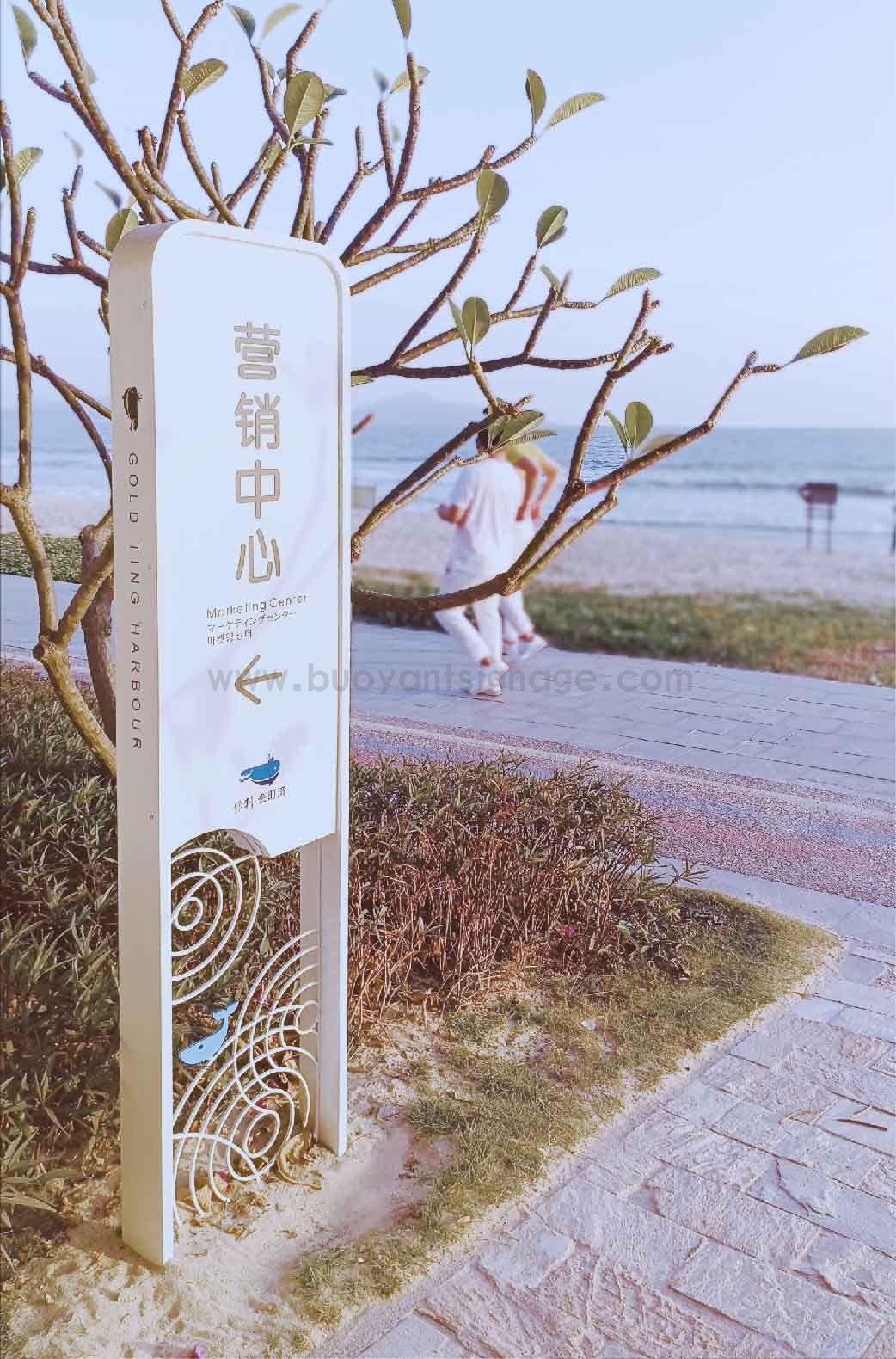
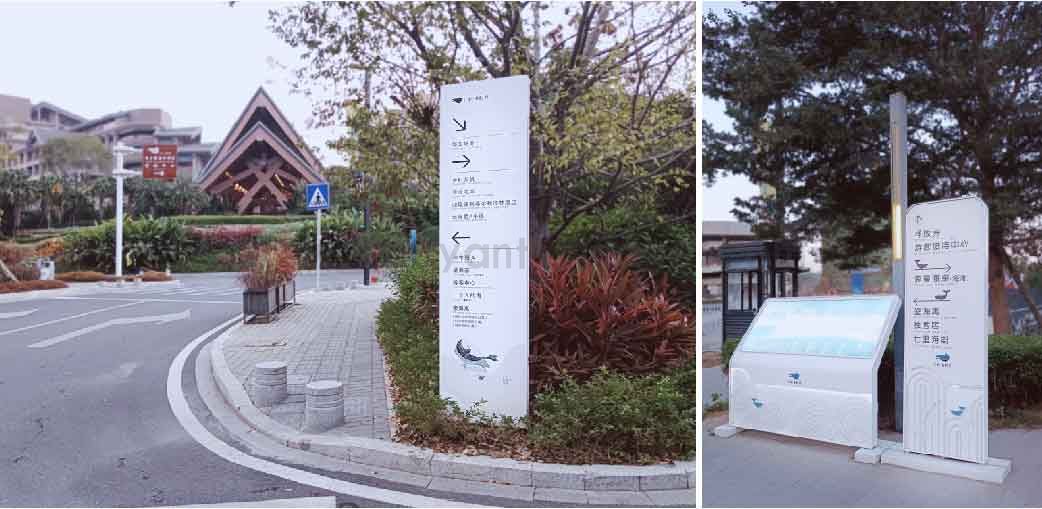
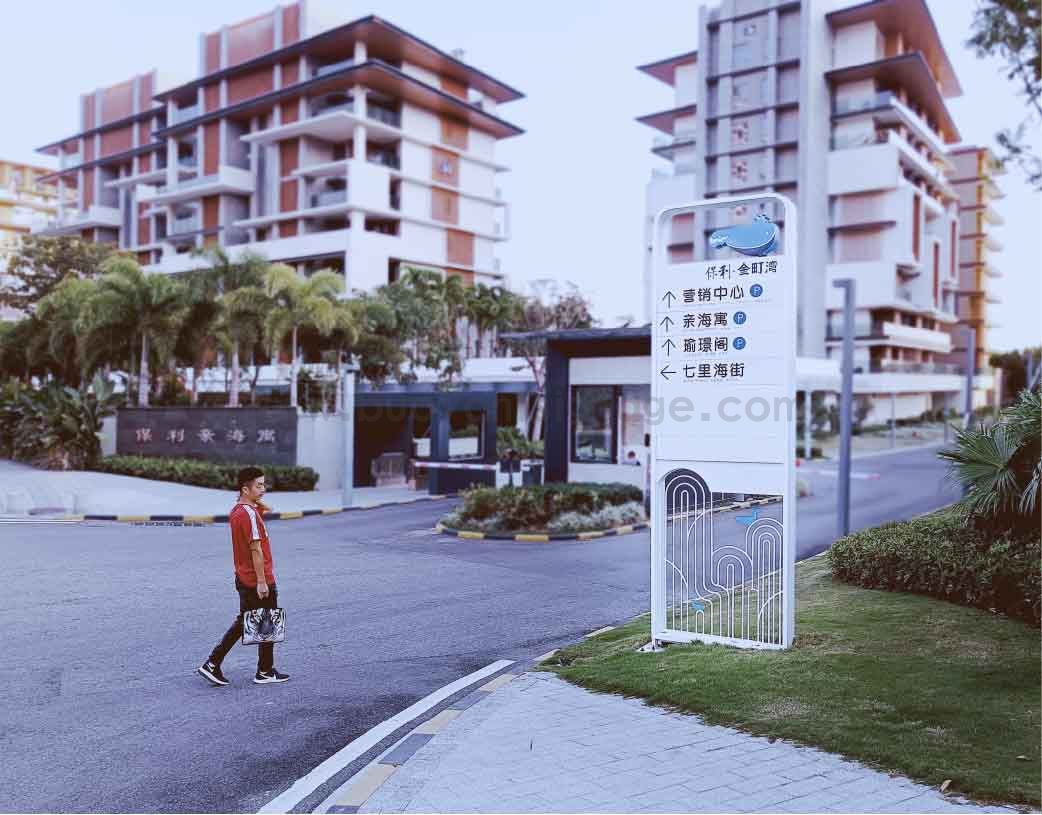
Case Example|Poly Jin Ting Bay
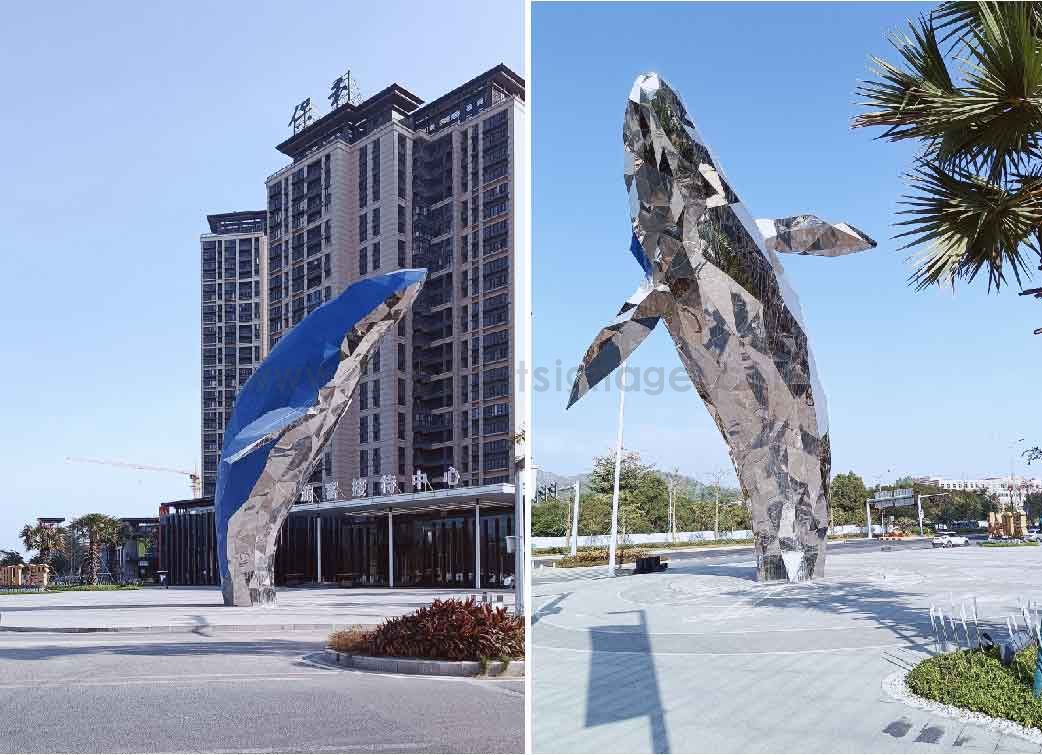
At Poly Jin Ting Bay, Buoyant Signage mapped outdoor promenades,
commercial streets, hotels, visitor centers, and residential communities, ensuring wayfinding served each zone appropriately and prevented information confusion.
Key Point 2: Hierarchical Design for Multiple User Groups
Integrated complexes have diverse users, including tourists, hotel guests, commercial visitors, and residents. Wayfinding should:
⚪Provide intuitive, easy-to-read information in public areas
⚪Emphasize order and recognition in hotel and residential zones
⚪Consolidate information and provide guidance in visitor centers
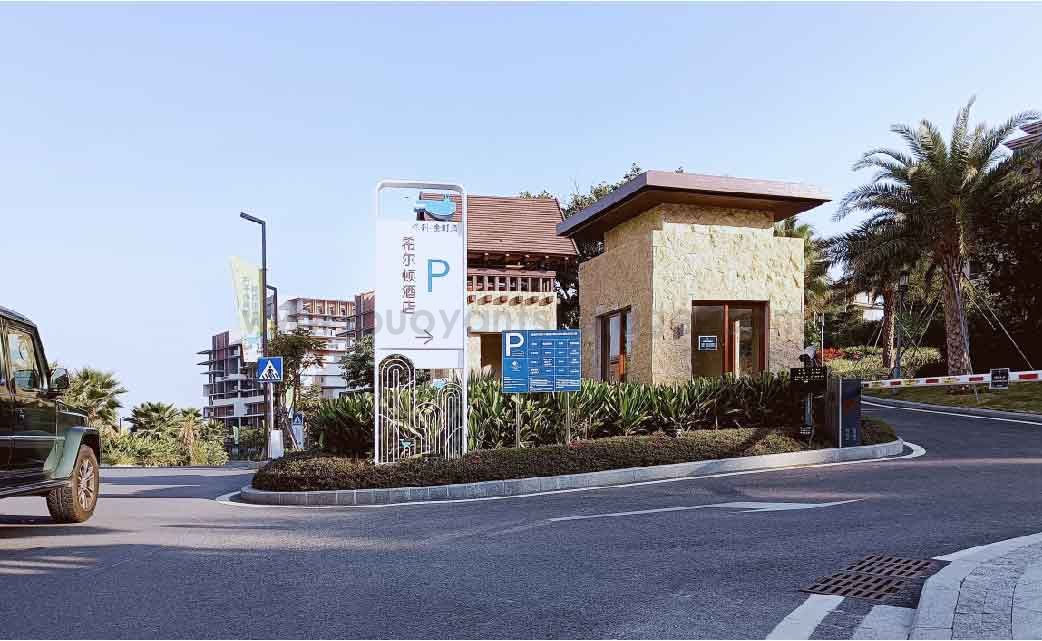
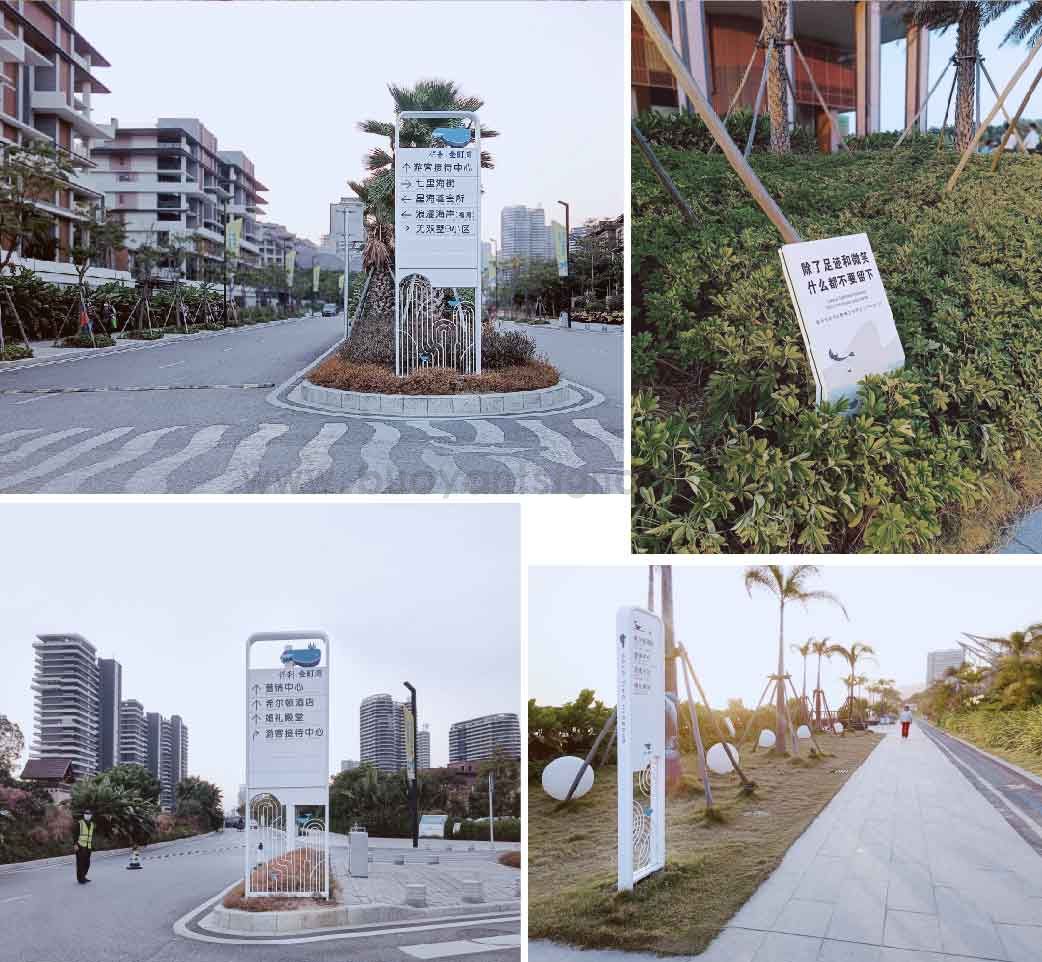
Case Example|Poly Jin Ting Bay
The project implemented a hierarchical system during design development,
allowing different users to quickly understand navigation while maintaining a consistent visual style.
Key Point 3: Materials & Structure Must Suit Coastal and Outdoor Environments
Coastal complexes require durable materials for outdoor use:
High humidity and salt corrosion
Strong UV exposure
Large-scale site and complex circulation
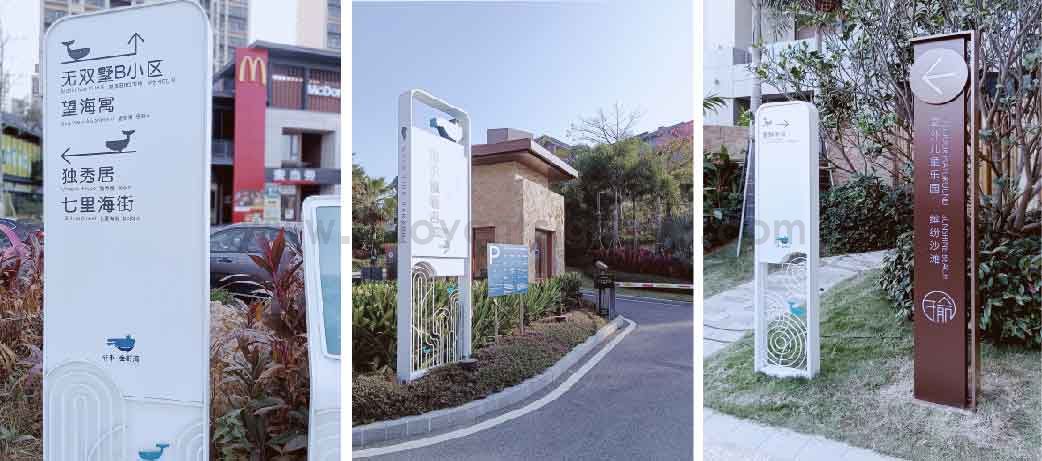
Case Example|Poly Jin Ting Bay
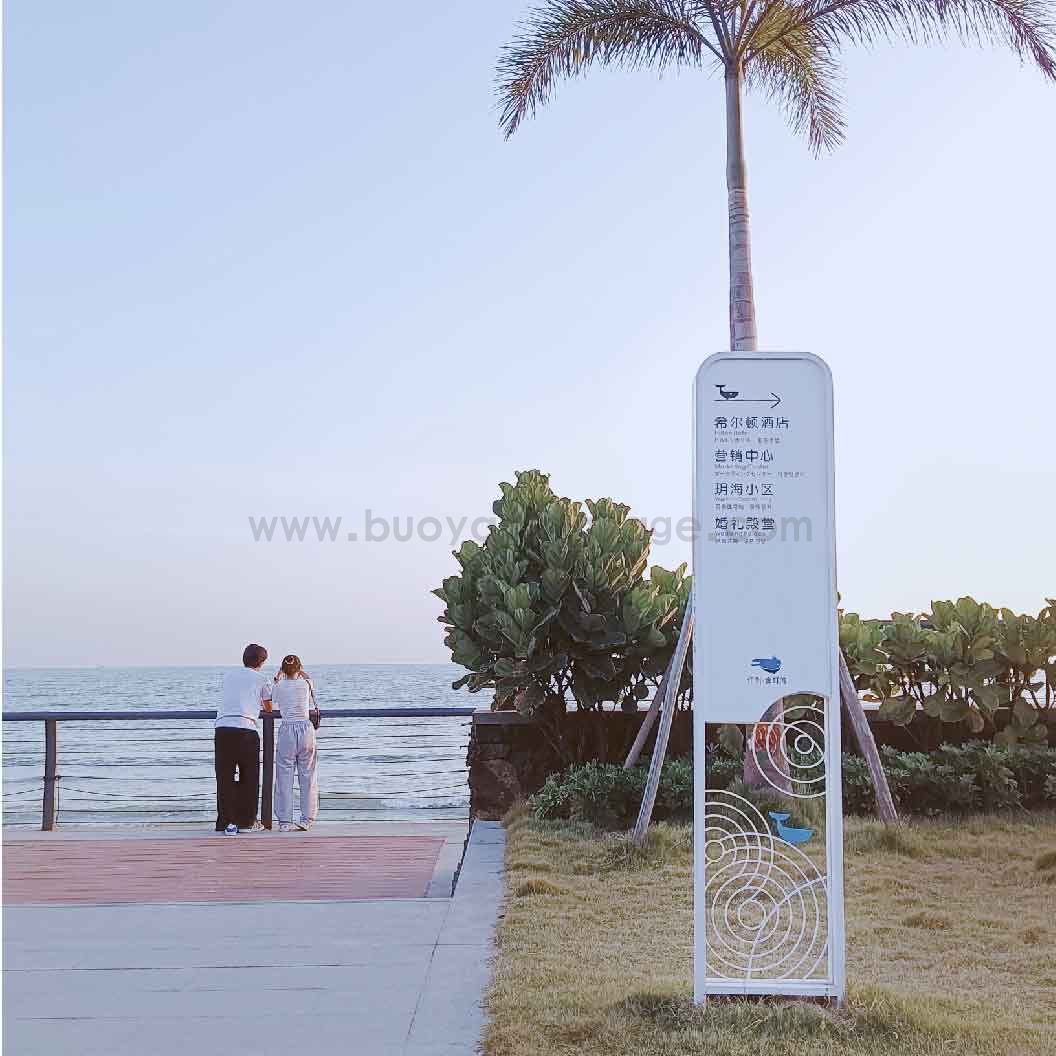
Wayfinding signage used 304 / 316 stainless steel structures combined
with high-durability surface treatments, ensuring long-term stability in coastal outdoor conditions.
Key Point 4: Wayfinding Should Integrate with Architecture and Landscape
A good wayfinding system should blend seamlessly into its environment:
⚪Collaborate with architectural and landscape design teams
⚪Control scale, proportions, and color palette
⚪Maintain a unified material language and aesthetic consistency
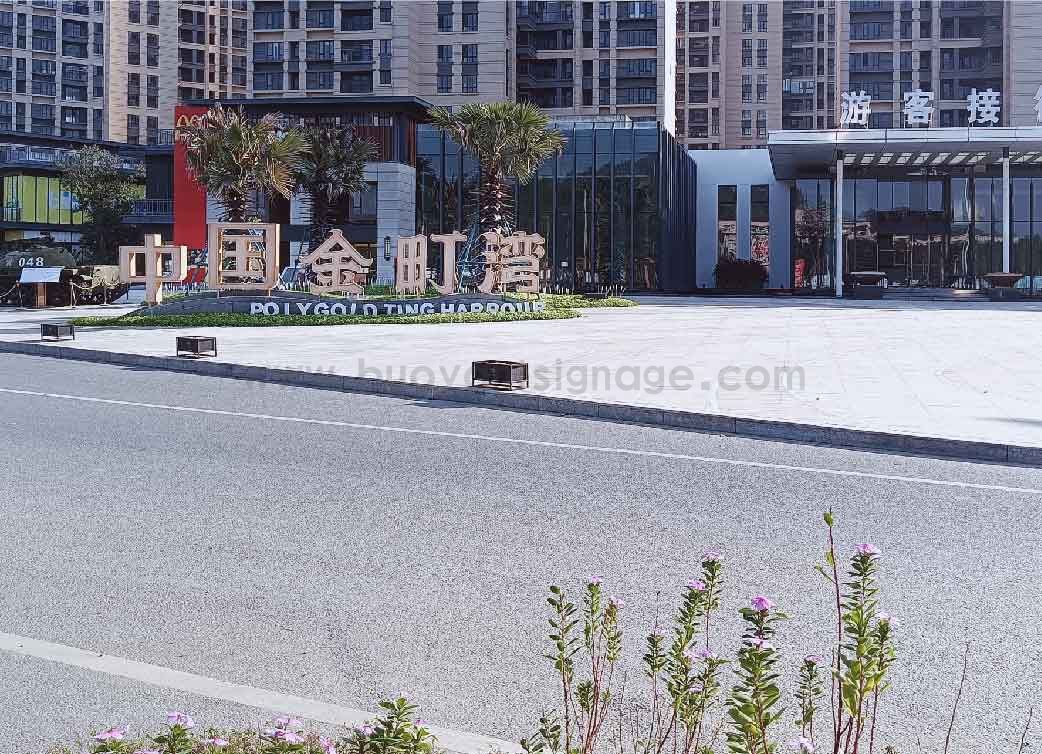
Case Example|Poly Jin Ting Bay
Signage harmonized with coastal landscapes and architecture, achieving both functionality and high-end visual quality.
Key Point 5: Manufacturing & Installation Capabilities Are Critical
Large integrated complexes involve high quantities, varied signage types, and dispersed installation points, requiring:
A supplier with large-scale production capability
Modular and standardized structural design
Controllable delivery schedule and quality system
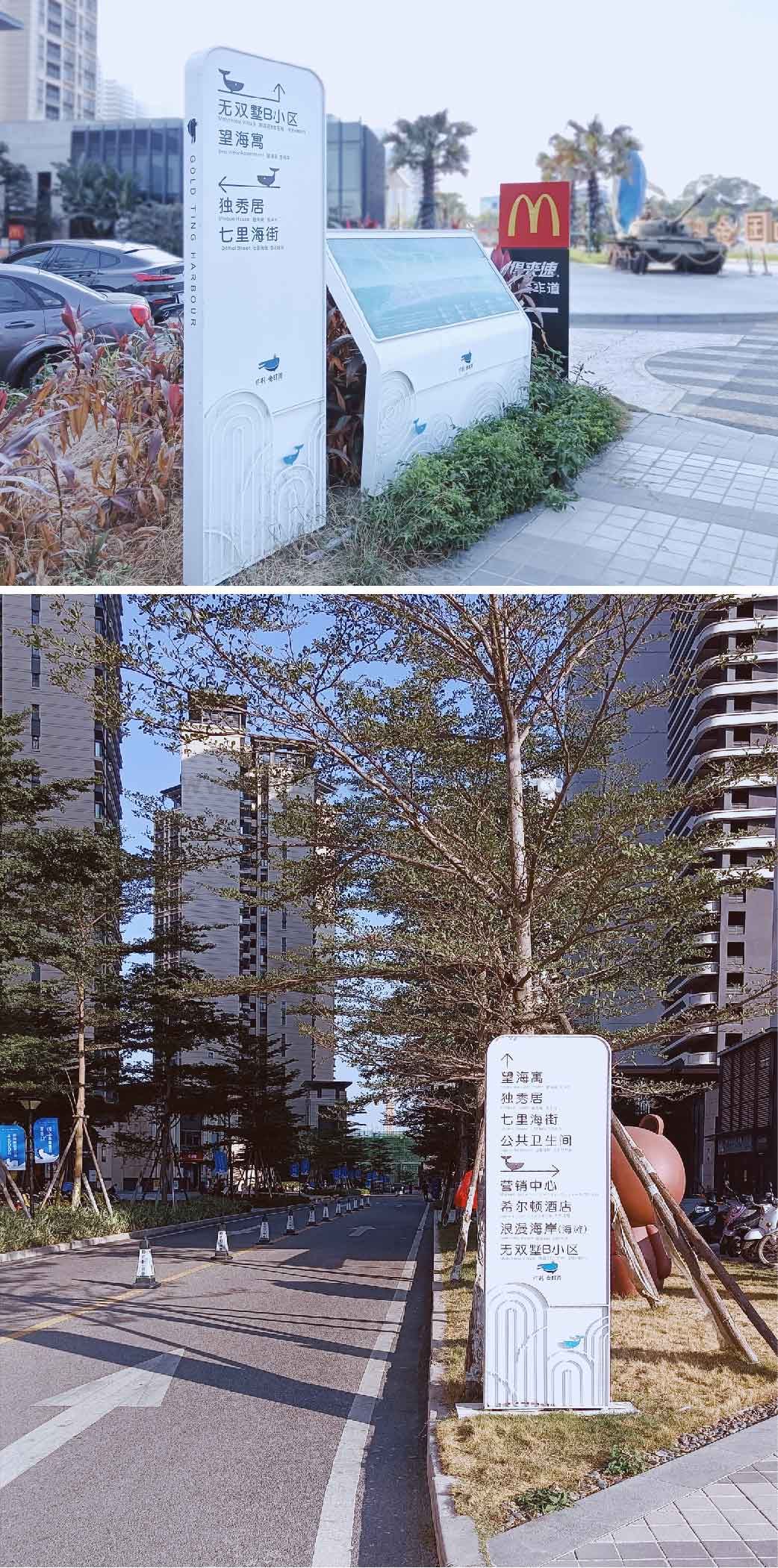
Case Example|Poly Jin Ting Bay
Buoyant Signage utilized modular structures and standardized manufacturing, ensuring quality, installation efficiency, and reduced maintenance costs.
Conclusion|Wayfinding Is a Systematic Process
The Poly Jin Ting Bay project demonstrates that wayfinding system planning in integrated complexes is a comprehensive task,
covering spatial planning, user experience, material engineering, and manufacturing execution.
A mature wayfinding system should:
⚪Provide clear spatial logic
⚪Offer a user-friendly experience
⚪Ensure long-term durability
⚪Integrate seamlessly with the overall environment
Applicable Project Types
⚪Integrated cultural & tourism complexes
⚪Coastal resort developments
⚪Hotel & commercial street combinations
⚪Large public spaces and visitor centers
Customize an exclusive wayfinding system for your project?
Click "Contact Us" below for free consultation

Get in Touch
For Custom Signage Solutions
Email: signage@buoyantmfg.com
Website: www.buoyantsign.com
Scan to Connect

Production Industrial Park Location:
Huizhou City, Guangdong Province, China
Shenzhen Office Location:
Shenzhen City, Guangdong Province, China
Keywords
Integrated cultural & tourism complex wayfinding
Tourism project wayfinding design
Coastal development wayfinding system
Poly Jin Ting Bay wayfinding case
China wayfinding system manufacturer
Copywriting: Wendy
Review: Wendy
Manufacturing and product photos captured at BUOYANT factory
Related News
Read More >>
 5 Key Points for Wayfinding Sy
12 .29.2025
5 Key Points for Wayfinding System Planning in Integrated Cultural & Tourism Com
 Why High-Quality Custom Signag
04 .25.2026
A Case Study of Poly Jintown Bay Signage Design and ManufacturingIn premium resi